
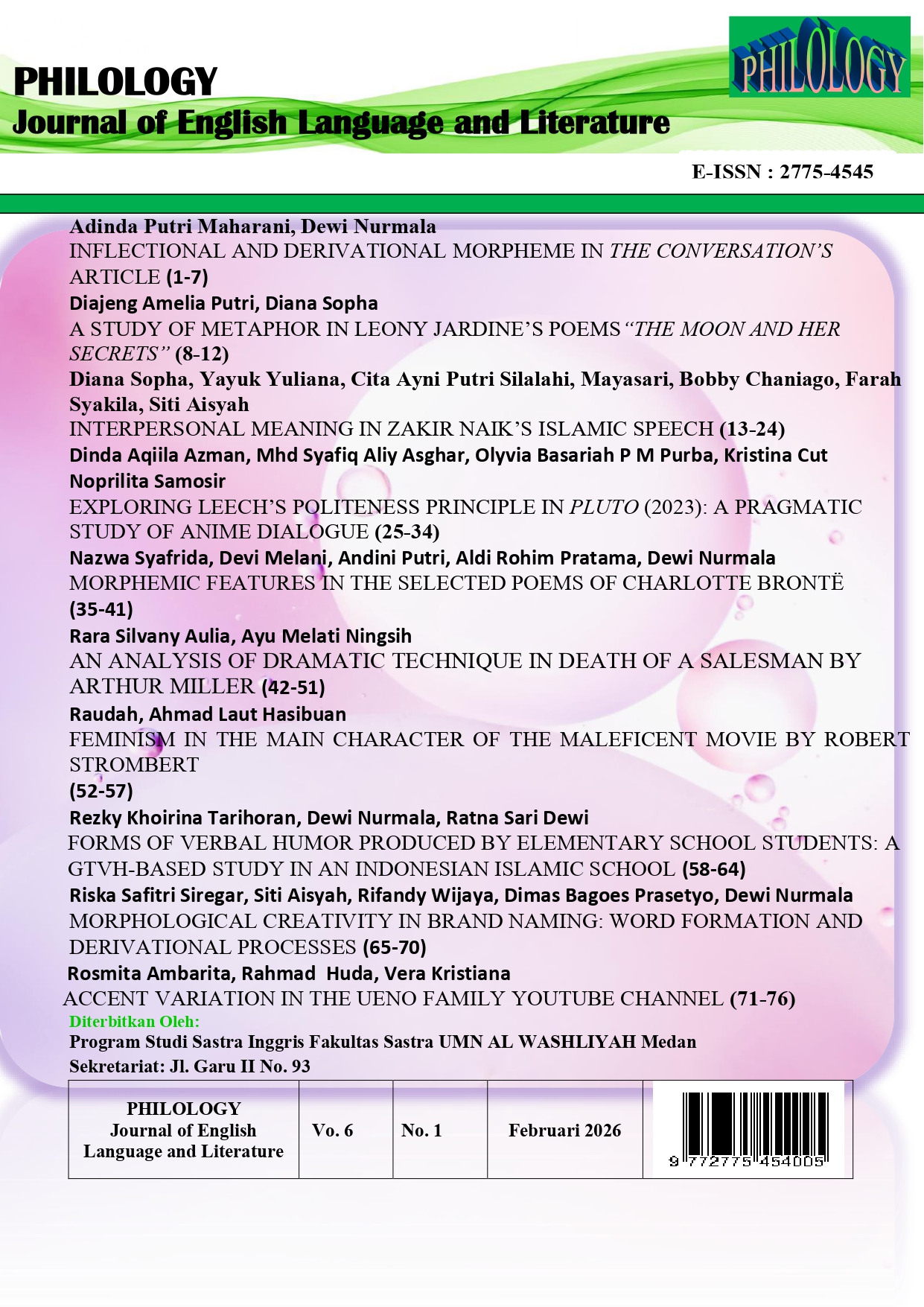
FORMS OF VERBAL HUMOR PRODUCED BY ELEMENTARY SCHOOL STUDENTS: A GTVH-BASED STUDY IN AN INDONESIAN ISLAMIC SCHOOL
Article Sidebar
Main Article Content
Abstract
This study investigates the forms of verbal humor produced by elementary school students at Madrasah Ibtidaiyah Swasta (MIS) Syababul Qorib Perbaungan, Indonesia. Data were collected through participatory observation, interviews, and audio-visual documentation of students’ verbal interaction during formal learning activities and informal peer communication. The analysis was conducted by examining humorous utterances through the six Knowledge Resources of GTVH: Script Opposition, Logical Mechanism, Situation, Target, Narrative Strategy, and Language. The findings reveal that students consistently produce structured forms of verbal humor, including riddle-based humor, metaphorical humor related to learning content, light peer-directed teasing, situational humor, and media-influenced digital humor. These forms emerged from recurring configurations of script opposition and logical mechanisms adapted to age-appropriate language and classroom contexts. This study contributes to applied linguistic research on child humor and extends the application of GTVH to naturally occurring discourse in Indonesian Islamic elementary school settings.